How to Deep Clean Fabric Car Seats at Home: Step‑by‑Step Guide
Introduction
Fabric car seats provide comfort and style, but daily use introduces spills, dust, pollen, and stubborn stains. A thorough deep‑clean restores the original look, eliminates odors, and preserves the upholstery’s lifespan. This guide teaches the reader how to clean fabric seats using household tools and professional‑grade products, explains why each product is chosen, and offers tips to avoid common pitfalls.
What You’ll Need
- Vacuum with upholstery attachment
- Soft‑bristle brush or microfiber scrub pad
- Microfiber towels
- Spray bottle (optional for dilution)
- Protective gloves
- Cleaning solutions – see recommended products below
The recommended solutions are proven by high ratings and specific features that make them ideal for each stage of the process.
Step 1 – Prepare the Interior
Before applying any liquid, remove loose debris. Seat belts, floor mats, and personal items should be taken out of the cabin.
- Use a vacuum with a crevice tool to extract dust, sand, and hair from the seat surface, seams, and crevices. A clean surface allows the cleaning agents to reach the fibers directly.
- Lightly mist the fabric with water to loosen surface grit, then vacuum again. Do not saturate the upholstery.
This preparatory step reduces the amount of product needed and prevents mud‑like residue from forming during cleaning.
Step 2 – Apply a Pre‑Treat Cleaner
For fresh spills or localized stains, a targeted pre‑treat works best. The Chemical Guys Citrus Fabric Cleaner is a ready‑to‑use spray that creates a thick foam, lifts dirt, and leaves a fresh citrus scent.
- Key features: foaming action, safe on most fabrics, quick application, price $9.99, rating 4.3/5 from 1,144 reviews.
- Why it matters: The foam suspends particles, making them easy to wipe away without aggressive scrubbing that could damage delicate fibers.
Spray the cleaner directly onto the stained area, let it sit for 30‑60 seconds, then agitate with a soft‑bristle brush. Wipe with a microfiber towel and allow the seat to air dry.
Step 3 – Full‑Seat Foaming Clean
When the entire seat requires attention, a larger volume of foam provides uniform coverage. The Chemical Guys Foaming Citrus Fabric Cleaner generates high‑density foam that penetrates deep into fibers.
- Key features: high‑foam formula, safe on synthetic and natural fibers, removes stains and odors, price $10.10, rating 4.5/5 from 30,273 reviews.
- Why it matters: The thick foam clings to the fabric, breaking down embedded grime while the citrus fragrance masks lingering odors.
Shake the bottle well, spray a generous amount over the seat, and work the foam with a circular motion using a microfiber scrub pad. After 2‑3 minutes, blot excess foam with a clean towel. The seat will feel slightly damp but not soaked.
Step 4 – Use a Brush Kit for Stubborn Spots
For tougher grime or textured upholstery, the Chemical Guys Citrus Fabric Cleaner Kit pairs the same foaming spray with an Induro 7 Heavy‑Duty Nifty Brush.
- Key features: low‑moisture foaming formula, ready‑to‑use spray, heavy‑duty brush, price $19.99, rating 4.4/5 from 365 reviews.
- Why it matters: The brush’s bristles agitate fibers without tearing them, allowing the foam to lift deep‑seated particles that a hand‑only approach might miss.
Apply the spray to the problem area, then use the Nifty Brush in short, overlapping strokes. Rinse the brush periodically with water to avoid redistributing dirt. Finish by blotting with a dry microfiber towel.
Step 5 – Treat Extremely Stubborn Stains
If coffee, wine, or pet messes remain after the previous steps, the Chemical Guys Lightning Fast Stain Remover offers a concentrated, fast‑acting formula.
- Key features: professional‑strength stain extractor, safe on natural and synthetic fibers, neutralizes odors, price $11.97, rating 4.5/5 from 26,364 reviews.
- Why it matters: Its deep‑penetrating solvents break molecular bonds of dried stains, allowing quick removal with minimal scrubbing.
Spray directly onto the stain, wait 10 seconds, then agitate with a soft brush. Blot with a clean towel until the stain lifts. For large areas, repeat the process in sections to avoid over‑wetting the seat.
Step 6 – Extract Excess Moisture
Even low‑moisture foams leave some liquid in the fabric. Removing this moisture speeds drying and prevents mildew.
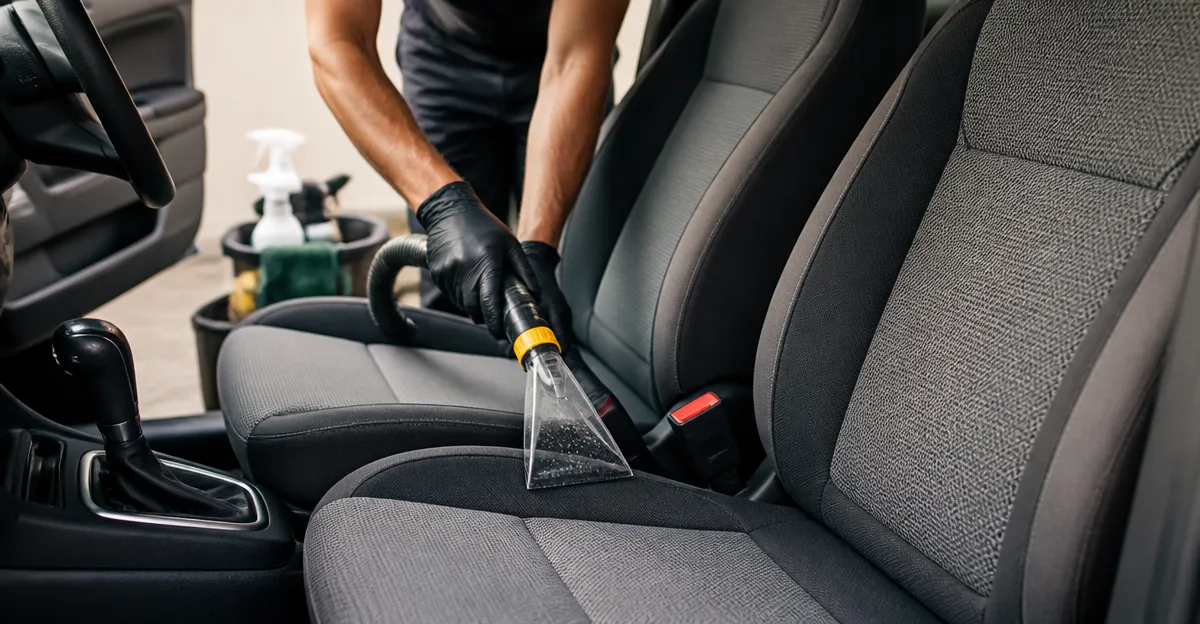
The BISSELL Little Green Portable Cleaner functions as a handheld extractor, providing suction and a spray‑clean cycle in one compact unit.
- Key features: 48 oz clean‑water tank, triple‑action formula, portable design, price $99.99, rating 4.5/5 from 94,156 reviews.
- Why it matters: The machine sprays a small amount of solution, agitates with a brush, then immediately suctions the liquid, leaving the upholstery damp‑but‑dry.
Fill the clean‑water tank with the manufacturer’s solution or a diluted mixture of the foaming cleaner, attach the scrubbing nozzle, and run the unit over each seat. Move slowly to allow the suction to capture the displaced liquid. After treatment, allow the seats to air‑dry for 30‑45 minutes before reinstalling floor mats.
Tips & Pro Tips
- Test in an inconspicuous area: Always spray a small hidden spot first to confirm colorfastness.
- Work in shade: Direct sunlight can cause cleaning solutions to dry too quickly, leaving residue.
- Use a separate brush for each seat: Prevent cross‑contamination of dirt between the driver’s and passenger’s seats.
- Protect leather components: If your vehicle has leather trim adjacent to fabric seats, cover it with plastic before spraying.
- Ventilate the cabin: Open windows or doors while cleaning to disperse citrus odors and speed drying.
- Apply a fabric guard after cleaning: Chemical Guys offers a Fabric Guard that adds water‑repellent protection, extending the clean state.
Troubleshooting
| Problem | Possible Cause | Solution |
|---|---|---|
| Stain remains after first attempt | Insufficient dwell time or low‑temperature foam | Re‑spray, let sit 1‑2 minutes, then agitate with the Nifty Brush. |
| Foam leaves a sticky residue | Over‑application or using a non‑recommended brush | Blot excess foam with a clean microfiber towel; use a soft brush only. |
| Seat feels damp for hours | Too much liquid or poor ventilation | Run the BISSELL Little Green extractor to remove excess moisture; open windows to improve airflow. |
| Odor persists after cleaning | Deep‑seated odor not addressed | Apply a second coat of Lightning Fast Stain Remover, which includes odor‑neutralizing agents. |
Conclusion
By following these six steps—pre‑vacuum, targeted pre‑treat, full‑seat foaming, brush‑assisted agitation, concentrated stain extraction, and moisture extraction—one can achieve a professional‑grade deep clean of fabric car seats using tools that are both affordable and effective. Regular maintenance using the recommended products will keep seats looking fresh, extend their life, and maintain a pleasant interior environment.
Products Mentioned in This Guide
Frequently Asked Questions
What tools are essential for deep cleaning fabric car seats at home?
You need a vacuum with an upholstery attachment, a soft‑bristle brush or microfiber scrub pad, microfiber towels, a spray bottle, protective gloves, and a suitable cleaning solution.
How should I prepare the car interior before cleaning the seats?
Remove loose debris, seat belts, floor mats, and personal items, then vacuum the seats thoroughly using a crevice tool to extract dust, sand, and hair.
Which cleaning solution is best for stubborn stains on fabric seats?
A pH‑balanced upholstery cleaner with enzymatic agents works best, as it breaks down organic stains without damaging the fabric.
How often should I deep clean fabric car seats to keep them looking new?
Deep clean the seats every 3–4 months, or sooner if you notice spills, odors, or heavy buildup.
Can I use a regular household vacuum or do I need a special attachment?
A regular vacuum is fine, but use the upholstery or crevice attachment to reach seams and tight corners effectively.